Geopolitics
-
Nariman Narimanov, who was born 150 years ago this April, was a patriotic, humanistic Bolshevik. He was also the major figure who facilitated the Bolshevization of the Republic of Azerbaijan, which began around this time in the same month 100 ago. It may seem strange to some readers to commemorate these two events. After all,…
-
This is the 28th Anniversary of the massacre at Khojaly, when Armenian forces destroyed an Azerbaijani town in Nagorno-Karabakh and killed over 600 people in cold blood. The following is the text of an interview I gave to Eurasia Diary/Eurasia Media Network with my thoughts on the event: ED: 28 years have now passed since…
-
Did the “Great War for Democracy”– which was nothing of the sort – result in a democracy that subverted the Peace in 1919? That is an awkward question that has been ignored by historians. A very astute Frenchman, Andre Siegfried, wrote a number of books in the 1920s and 1930s about the character of England,…
-
The great dream of the Tsars over the centuries had been to conquer and convert the Ottoman capital of Istanbul/Constantinople into Tsargrad and free the Straits for the Russian Black Sea fleet. In 1914 Tsar Nicholas II entered into alliance with the British Empire in order to fulfil that dream as a part of the…
-
The short answer is: when Tsar Nicholas II offered his country and its population up to Britain in its Great War of 1914 to destroy Germany and break up the Ottoman Empire. In waging that War, in which Russia was bled to collapse in return for substantial British finance to continue fighting to the bitter…
-
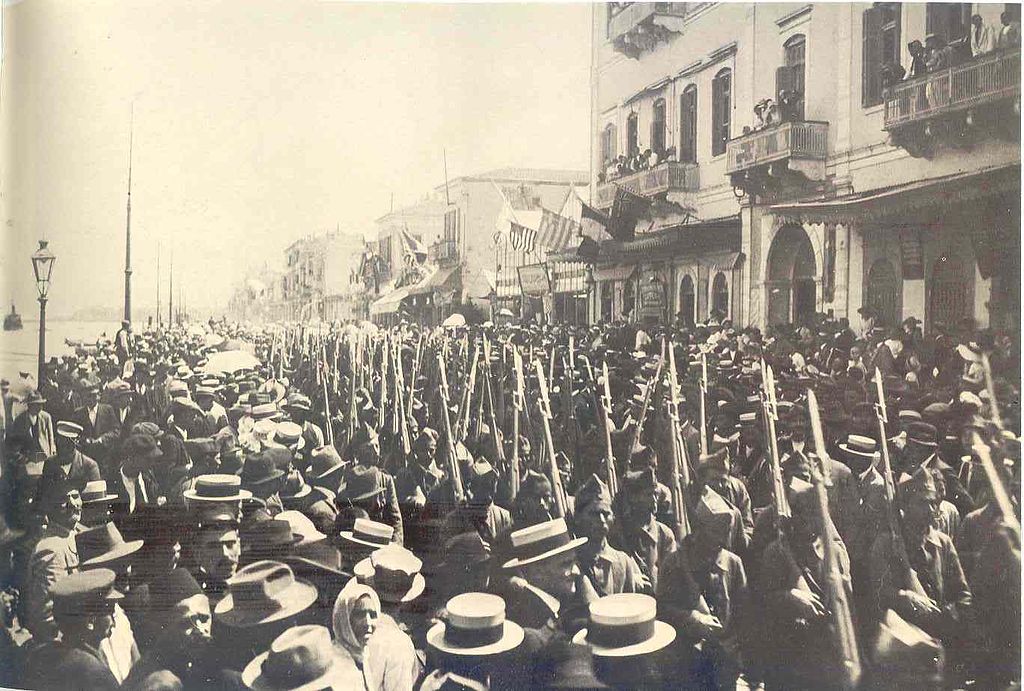
May 2019 marks the Centenary of the invasion of Ottoman Anatolia by the Greek Army, acting as Lloyd George’s cat’s-paw to enforce a punitive settlement on the Turks. The political and military assault launched by Britain during the Great War on neutral Greece and the devastating effect this ultimately had on the Greek people across…
-
The Young Turk government in Istanbul (aside from Enver Pasha anyway), the Sultan/Caliph, and even the leader of the Turkish resurgence in Eastern Anatolia, Mustapha Kemal, were all favourably disposed to Britain and the West. The Turkish leadership would have been very open to a reasonable and honourable peace settlement with the Allies, either negotiated…
-
Aside from the policy of the British Prime Minister, Lloyd George, there were two other factors that led to the loss of the Caucasus to the Bolsheviks. The first of these was that special and discordant element in the region, the Armenians – who immensely complicated matters. The second was Britain’s continuing and purposeless hostile…
-
Lloyd George gave the coup de grace to the Russian Whites in his infamous Guildhall speech of 8 November 1919. He made the speech without consulting his Cabinet colleagues and it had the effect of a bombshell. As Harold Nicolson wrote the diplomacy of Lloyd George was most of all characterised by its privacy –…
-
As early as the end of January 1919 Lloyd George indicated to the Allied Supreme Council that, despite the influx of troops over the previous mouths, he saw the British occupation of the Caucasus as a temporary phenomenon. On 6 March the Inter-Departmental Conference on Middle Eastern Affairs under Lord Curzon, to which the Cabinet…

