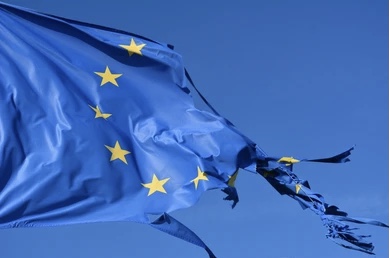
Two years ago, on 18 July 2022 Ursula von der Leyen, head of the EU Commission, issued a Memorandum of Understanding statement in Baku, noting that because Russian gas supplies were “no longer reliable”,
“The European Union has therefore decided to diversify away from Russia and to turn towards more reliable, trustworthy partners. And I am glad to count Azerbaijan among them. You are indeed a crucial energy partner for us and you have always been reliable. You were a crucial partner not only for our security of supply, but also in our efforts to become climate neutral. The Memorandum of Understanding that we have just signed makes our energy partnership even stronger.”
The Memorandum of Understanding promised Baku the investing of EUR 60 million of EU funds in Azerbaijan until 2024, with the Economic and Investment Plan having “the potential to mobilise up to EUR 2 billion in additional investments.” Von der Leyen also promised that the EU would be the “leading donor in de-mining” of Karabakh and announced a new EUR 4.25 million package for this purpose.
The present writer commented at the time: “Who could blame Azerbaijan for taking advantage of this sudden benevolence from the EU after so many years of being treated as second class in relation to Armenia?”
I also noted at the time that Gubad Ibadoghlu, a Senior Visiting Fellow at the London School of Economics was asking: “How feasible is it for the EU to use imports from Azerbaijan as an alternative to Russian gas?” in an article entitled Could Azerbaijan help the EU reduce its dependence on Russian gas? for the LSE website. He answered the question in the following way:
“Last year, Azerbaijan supplied 8.15 billion cubic meters of gas to European markets via the TAP pipeline… The order from Europe to Azerbaijan for 2022 is 9 billion cubic metres, and for 2023, it is 11 billion cubic metres. Europe wants the Southern Gas Corridor to be expanded. If the expansion works begin soon, the pipeline’s capacity will reach 31 billion cubic metres in 2025, which is the maximum design capacity.
However, in order to increase exports to Europe, Azerbaijan must launch at least the second project in the Absheron field. In the future, it is expected to sell 5-6 billion cubic metres of gas to the European markets within this project. However, it will take at least four years to increase production in the Absheron field. This means that if the deeper installation of the platform begins in 2023, construction will take until 2027. At the same time, in 2027, along with the Absheron field, gas volumes may be increased in the Karabakh and Kapaz oil and gas fields, as well as in the Umid field. Thus, in around five or six years, Azerbaijan can increase gas exports to Europe by 5-7 billion cubic metres.
As things stand, Azerbaijan will be unable to help Europe meaningfully reduce its dependence on Russian gas in the near future. There are at least two reasons for this. The first is the limited annual capacity of the TAP pipeline, which delivers Azerbaijani gas to Europe. At present, the capacity of the TAP pipeline allows for the transportation of 10-11 billion cubic metres of gas. The capacity of the TAP pipeline can be expanded to 20 billion cubic metres. In addition, the Southern Gas Corridor project requires additional investment and time. This project needs to be developed and its annual capacity can be increased first to 24 billion cubic metres and then to 31 billion cubic metres. At the same time, European gas buyers must make legal and commercial commitments to Azerbaijani gas producers. These changes will take time.
Second, even if the capacity of the TAP pipeline is increased in the short term, Azerbaijan will not be able to increase gas exports to Europe in the coming years. As noted, in order to achieve this, along with Azeri-Chirag-Guneshli and Shah Deniz, gas production from the Absheron, Karabakh, Kapaz, and Umid oil and gas fields must be increased.
In the short term, Azerbaijan simply does not have the opportunity to provide an alternative to Russian gas for the EU. In fact, even if there was enough gas, it would technically be impossible to deliver it to Europe. At best, in five years, Azerbaijan will be able to transport 20 billion cubic metres of gas to Europe within the second phase of the Southern Gas Corridor. Therefore, among the alternatives for Europe to decrease its dependence on Russian gas, Azerbaijan’s capabilities seem weak compared to the United States, Qatar, Algeria, and even Iran.”
“President Aliyev has been playing down the notion of Azerbaijan rescuing Europe from its predicament by replacing Russian energy and has, more accurately, described it as helping Europeans out in time of need. That is an important distinction because it is realised in Baku that whilst Azerbaijan may gain a more even-handed approach from the Europeans in the future, and better relations, there will not be an overturning of the current power relations in the region.”
The accuracy of that estimation has been borne out in the European Council’s announcement of an assistance measure under the European Peace Facility (EPF) in support of the Armed Forces of the Republic of Armenia worth €10 million which has greatly angered Baku. This followed France signing a contract in June to sell Caesar self-propelled howitzers to Armenia and French Defense Minister Sébastien Lecornu describing the agreement as a significant step in military cooperation between France and Armenia. Paris has also begun delivering military equipment to Armenia as part of previous agreements including French-made “Bastion” multi-purpose armored personnel carriers and additional components. Reports also indicate potential future acquisitions, including “Mistral” short-range surface-to-air missiles and “VAB MK3” armored vehicles.
This provoked Azerbaijani Defense Ministry to issue a stern warning to the United States, the European Union, and France to avoid destabilizing the South Caucasus through military support for Yerevan.
There was an interesting article in the Financial Times of London last month. Vaqif Sadiqov, Azerbaijan’s Ambassador to the European Union, told the newspaper that the European Union is currently treating the country as a “firefighter” by only being willing to commit to short-term gas deals despite Ursula von der Leyen’s Memorandum of Understanding with Baku.
Azerbaijan needs the certainty of long-term contracts in order to raise the finance required to increase gas production in the Caspian Sea and meet the additional EU demand.
Mr Saqikov said that “We cannot be a firefighter just sending gas for three to six months. We need the contracts so that we can go to banks for financing for drilling deep into the Caspian Sea.” Despite discussions with the EU Commission about how to meet the targets of the 2022 deal to increase Azerbaijan’s annual gas exports to the European Union to 20 billion cubic metres by 2027, EU operators have been reluctant to sign long contracts because it conflicts with the EU’s ambition to curb its consumption of fossil fuels and reach net zero greenhouse gas emissions by 2050. EU officials have bizarrely said it is up to companies rather than national governments to make the commercial agreements as if great energy transitions can be achieved by private commercial interests!
Azerbaijan President Ilham Aliyev said at the 2nd Shusha Global Forum:
“We must put a stop to this hypocrisy. On one hand, they ask us to increase the production of gas and deliver it to Europe because they are now in shortage. On the other hand, they do not finance it… The European Investment Bank (EIB) has totally stopped financing fossil fuel projects. The European Bank for Reconstruction and Development (EBRD) has almost totally stopped financing these projects. The Southern Gas Corridor, which is an integrated 3,500-kilometer pipeline system, is fully utilized. It works at 100% capacity. There is a lot of demand from European countries for additional gas. We just signed, a couple of days ago, an agreement with a company from Slovenia, which will probably be the 9th consumer partner of Azerbaijan.
But European financial institutions have stopped financing. They want us to expand the Southern Gas Corridor from 16 to 32 billion cubic meters – TANAP and Trans Adriatic pipeline from 10 to 20 – to invest billions of dollars. I can tell you that we have not recovered the costs of the Southern Gas Corridor so far. And we are still trying to recover them. All that we earn from gas sales goes to finance the debts. They want us to put in additional billions, while at the same time, they in the EU say that in 10 years or maybe less they will no longer need gas! So, we must be crazy to invest billions for something, which they will not need, and then they look into our eyes and say, “Where is our gas?” So, my message is, stop this game, you know, without fossil fuels, it’s not possible to live.
I know how much European companies invest in renewables, and I applaud them for that. They do a great job, but international analysis demonstrates that no matter how much they invest, they will still face shortages. They will still need additional energy, which is why we are working on the cable. Not only that, but just a couple of months ago, we signed an MOU with Uzbekistan and Kazakhstan to evaluate the possibility of an undersea cable in the Caspian because these two countries also have great renewable potential and some projects are being implemented. So, if everything goes according to our plan, we could have a green energy cable from Uzbekistan, Kazakhstan, Caspian, Azerbaijan, Georgia, Türkiye, and then Romania. This would be a project even bigger than the Southern Gas Corridor, but we need cooperation and we need coordination.”
Finding new sources of natural gas has become critical for Europe since Washington leaned on Europe to end its commercial relations with Russia, which provided the cheap and reliable energy supply to the continent that fueled economic development and prosperity. In reaction Russia, the EU’s largest supplier, has begun to shut off gas flows, in retaliation for the EU’s sanctions and support for Ukraine.
In parallel, the EU has committed to climate goals to cut greenhouse gas emissions by 90 per cent by 2040, and fossil fuel consumption 80 per cent less than in 2021, of which only 40 per cent would be gas.
Matthew Bryza, former US ambassador to Azerbaijan, said that to reach the EU’s 2027 target for Azerbaijani imports, it was imperative to finance upstream production because Azerbaijan would not otherwise have sufficient extra gas production to meet the quantities specified in the 2022 deal. Between January and June 2024, Azerbaijan exported 6.4 bcm of gas to EU countries, about a quarter of its total production. Over the past three years Azerbaijan has increased its gas flows to the EU by 12 per cent. However, it seems that Brussels is unable to finance the project because of its rules that prevent the EU budget being spent on “fossil fuel infrastructure”. The European Investment Bank has similar restrictions.
Ironically this EU ideology is not only an impediment to its own energy security but to Kyiv, which is desperate for Brussels to make the required commitment to Azerbaijan’s energy supply to reduce Europe’s dependence on Russian energy. Europe has been very much dependent on US LNG supplies since the destruction of the Nord Stream pipeline and Biden’s Inflation Reduction Act.
Europe is now attempting to replace 5% of the world’s oil and gas. But in the middle of a “climate crisis” Europe’s orders of wind-turbines have been suspended and been replaced by large expenditure on temporary LNG terminals to receive the US gas. Germany built an LNG terminal in 8 months during 2022 – an unprecedented achievement of action that contrasts completely with the EU’s ideology but lack of action on renewables.
Russia was supplying to the market 227 billion cubic metres per year. That is gone. The EU currently needs 350 billion cubic metres of gas per year. The US, Qatar and Norway produce around 350 bcm per year so to meet Europe’s needs all of this would have to go to the EU, overriding existing contracts and involving massive infrastructure costs. This is why much industry is now abandoning Europe for the safety of the US and China. Norway sends down 110 bcm to Europe but to give this all to Europe would mean exiting the UK’s current contract. So the Russian gas cannot be replaced and someone is going to have to do without.
The conflict between Green ideology and Geopolitical reality is neatly illustrated by reference to what the US is doing. The Biden administration has committed itself to spending hundreds of billions of dollars on Green energy. It has also presided over a massive increase in natural gas extraction and has begun building pipelines right across the country. 2023 marked the highest level of oil and gas production that the United States had in its history. The US understands that the transition to a Green economy cannot be accomplished without a continuation of fossil fuel production. The geopolitical conflict that Washington has entered into with Russia and China has resulted in an expansion of fossil fuel production in the US.
Baku is hosting Cop29 in November. As part of this it has proposed the establishment of a Climate Finance Action Fund. The Climate Finance Action Fund would take financial contributions from fossil-fuel-producing countries and companies and use the money to invest in projects in the developing world that reduce greenhouse gas emissions and help build resilience to the impacts of extreme weather.
Yalchin Rafiyev, the chief negotiator for the Cop29 Baku presidency, said: “Traditional funding methods have proven to be inadequate to the challenges of the climate crisis, so we have decided on a different approach. The fund will be capitalised with contributions from fossil-fuel countries and companies and will catalyse the private sector. Any developing country will be eligible [to receive money from] the fund.”
The Guardian was quick to lead the media assault on the Azerbaijani proposal. It stated: “This falls well short of the levy on fossil fuels that some campaigners have been calling for.” It quoted Bronwen Tucker of campaign group Oil Change International:
“This is a dangerous distraction from the strong new climate finance goal and national plans that Cop29 must ensure for a fair, full and fast fossil fuel phase-out. Polluters must pay for their climate crimes on the scale of trillions, not with a $1bn voluntary fund that gives Big Oil decision-making powers. Fossil fuel interests have knowingly and systematically blocked, delayed and undermined necessary climate solutions and shouldn’t have a seat at the table.”
People like Bronwen Tucker live in a fool’s paradise.
Life is not possible now or for the foreseeable future without fossil fuels. Concrete, plastics, ammonia and steel are the four pillars of civilization on which the progress of modern society is built. When we talk about civilization we mean longer life, better health, medical advances, technological progress, affordable services, local and global mobility, abundant and affordable food, clean air and water and the preservation of natural landscapes.
It is not possible to produce any of these four pillars at scale without fossil fuels. Without concrete there would be no buildings or highways. Without steel there will be no buildings, transport or even electric cars. Without plastics there would be no healthcare industry. Without ammonia there would be no agriculture – or nothing that could support adequate life above a 2 billion population. Since the current world population is around 8 billion an abandonment of fossil fuels would result in the starvation of three-quarters of the world.
Without fossil fuels there is no civilization and it will take an extended period to get off them. It is possible we will never get off them until they run out. There is talk of the need for immediate transition but transition away to what? The transition would be to rapid inflation and great cost of living increases, widespread poverty and a huge fall in health and life expectancy. Under such conditions wars of an existential kind and a more brutish form of existence would be inevitable.
The Green lobby opposed the shale revolution. In 1998 the world had the lowest ever oil prices in normal times and by 2005 the highest ever oil prices – around $147 a barrel. This is because there was a growing problem in relation to the cost of access to oil by 2005. The easier to extract oil reserves of the earth had been largely exhausted and the world was getting down to those which were more difficult and costly to extract.
The shale oil/fracking revolution – oil from the source rock – provided an extra generation in which a transition to a greener economy might occur. Shale was uneconomic while traditional oil extraction was cheaper but when the oil price climbed it provided for about 20 extra years of low energy prices and the opportunity for surpluses to be invested in green transition. However, the environmental lobby opposed shale extraction with talk of earthquakes!
By around 2040 we will be back to the 2005 situation as the shale wells decline and the cost of traditional oil extraction rises. At that point more energy will probably be needed to be expended in extracting oil than the extracted oil will actually produce after processing. Large subsidies for oil production will thereafter be required to sustain the industry. It is for this reason that the green transition is necessary, quite apart from any concern about climate change. Natural gas production is already compromised to an extent due to its function in oil processing.
If we want to electrify our energy supplies and decarbonise, the amount of mining across the world (including sub-sea mining) will need to be expanded by around 60 per cent, with the consequent increase in the expenditure of energy being provided by the only thing possible to achieve this – fossil fuels. Fossil fuel production will, therefore, act as a subsidy for this activity necessary for the Green transition. However, if non-fossil fuels have to support this mining, that is essential for large scale energy based on renewables, the cost will become prohibitive. It is likely that a lot of mining of copper, steel, nickel, cobalt, lithium, graphite etc. and manufacturing would therefore have to stop. It takes on average 16 years to commission and open a new mine and hundreds of these mines will be needed by 2030 to provide the metals necessary for a transition. The metals/materials needed for renewables are only mined economically with the persistence of fossil fuel extraction and usage to produce energy.
There will have to be the largest exploitation of minerals in human history – in the order of thousands of per cent increases – to meet the demand for the energy minerals needed for the machines required to drive the renewables economy. And this probably exceeds the known earth reserves of all essential minerals and metals, aside from maybe copper alone. There will also be a level of inflation in the key metal commodities markets that has not been experienced in a century. And that will have big implications on costs of raw materials and resources. Large numbers of metal refineries will have to be built, which are very chemically challenging and ecologically damaging. The West has currently insisted these should be sited in places like Africa, because Westerners don’t like the pollution they cause.
Renewables are really a complete misnomer because all energy production requires the building of machines which all wear out in time. Turbines and solar panel infrastructure have to be built and replaced. They cannot be magicked out of nowhere are not renewable themselves. Only the energy itself is renewable. An EV car is 1000% more mineral intensive than an internal combustion car. It will have to be driven for around 120,000 miles before the EV has a lower carbon footprint than a traditional car. So EVs will have to encourage more driving, not less, to be energy efficient in a Green way. The range issue of vehicles may be overcome but that is not this issue. Batteries are hamstrung on how long they take to be fuelled/charged as opposed to conventional combustion engines.
The idea that renewables will cheapen energy is also false. They can only do so on a small scale in the initial phase that we are currently in, when the use of fossil fuels subsidise them. Both wind and solar energy drastically underperform in efficiency and are idle as producers of energy for around 85 per cent of the time, due to weather and seasonal considerations that are uncontrollable for humans. Fossil fuel power stations can work at nearly 100 per cent efficiency in any weather conditions, in any season and in any location. Renewables are presently supported and balanced by fossil fuel provision but a renewable power grid cannot be so balanced. It is wholly reliant on the variability of weather and season. Storage is technologically impossible at present for the buffer time required. When renewables are forced to bear the full burden of energy provision, without the fossil fuel subsidy, they will be far more expensive. So the most likely scenario is a large energy contraction.
There is one way, however, that renewables can cheapen energy and that is as an adjunct – and not as an alternative – to fossil fuels. We will see this in how the US will increasingly exert control over world energy markets through its present energy production bonanza. This bonanza is made up of a combination of traditional oil and gas pumping, plus fracking, plus renewables (particularly solar). The bonanza has enabled the US to defeat OPEC’s (plus Russia) attempts to limit production to maximise price. The US was recently able to release its strategic reserve to protect Europe from its cutting off from Russian supplies. It forced the price down by entering the market and then replenished its reserve at a profit by buying back at the lower price. The strategic reserve was created in the 1970s in response to the Arabs punishing the West for supporting Israel. The US determined that no upstart Arab was going to dictate to the West again and it is now showing who is boss. The US can override OPEC, therefore, at any time of its choosing and holds the West, and as much of the rest of the world it can, captive as a result. It will not surrender this great geopolitical power it has acquired through energy production to any environmentalist lobby and will continue to use the Green slogans as mere instruments of its power.
A rapid transition to renewables with abandonment of fossil fuels on EU targets would not only lead to great energy shortages but make inflation into a permanent feature of Western economies.
Energy is the basis of the cost of everything so it is the major component of inflation. We have seen this dramatically in recent years after the West launched sanctions against the Russian oil and gas supply. Those sanctions would have been greater and more thoroughly enforced except Western governments realised that if they had been their economies would have been wrecked and costs of living would have spiralled uncontrollably. Democratic governments do not, as a rule, commit suicide by turning their electorates against them by producing massive inflation. They realise that inflation is only tolerable for populations if it is temporary and that is why the West desisted from applying and enforcing sanctions against Russia (and China) in the way that the Foreign Policy establishment in Washington demanded. It would have been bringing forth Armageddon for the global economy.
There is a very strong correlation between energy use and GDP. There is also a strong correlation between the energy use of a country and life expectancy. Without energy life is brutal and short. By making energy more expensive you are shortening life, particularly for the less well-off in the world. The quickest way for any government to help the poor is to lower energy costs.
If something is not economically sustainable it is not sustainable – so renewables are not sustainable.
Renewables are essentially electric power and electric power is only producing around 5% of the world’s energy at the moment. They are probably capable of only producing around 20% of the demand for energy consumption. Renewables are, therefore, only a 20% solution because they cannot meet the bulk of demand, the 80%. Because the renewable solution is an electric solution it is only a 20% solution to the problem of energy.
Nuclear is also part of the electric power solution. However, we would have to triple the number of nuclear plants to add anything at all to the 20% provided by renewables. Russia or China might be able to enhance nuclear energy – but the West will not allow this. The electric vehicles, wind turbines and mining necessary for a Western transition are only available at the scale necessary from China and China would need a vast expansion of its productive forces to supply the West. It is unlikely the West could re-industrialise since its recent de-industrialisation. It cannot even collectively outproduce Russia in shell production, which is losing Kyiv the war in Ukraine.
China has most of the processing/refining minerals capacity in all the main metals needed by renewables – copper, nickel, cobalt, rare earths and lithium. China has a market share in energy minerals that is roughly double that of OPECs present share in oil. Will it be inclined to give these to the West considering Washington’s sabre rattling on Taiwan and declared intention of cutting China down?
Nuclear cannot get to a tripling of capacity from here because the Green anti-nuclear lobby halted it for a generation in the European Union. The anti-nuclear stance resulted in an absurd resorting to the dirtiest form of coal. These people, therefore, who helped produce Europe’s energy dependence on Russia are the same people who now drive Europe to economic meltdown and are among the chief warmongers on Russia. On current estimates nuclear will still be less than 5% of the world’s energy production by 2050.
It is sometimes argued that these realities will be overcome. The ideologists argue there will be exponential technological progress that will make Green energy hyper-efficient in the future. But that argument is bogus and closer to religious faith that science. The technologies that advance human progress and well-being all use energy, and more of it. The Pharmaceutical industry that come up with new vaccines to save the vulnerable in pandemics and the super-computers that use AI require monstrous amounts of energy. Ireland’s energy-hungry datacentres consumed more electricity last year than all of its urban homes combined. Now these datacentres account for around 20% of Ireland’s electricity use and are increasing it by nearly a quarter. Renewable energy sources are simply incapable of powering these new developments.
One cannot escape the finite world even through the utopian belief in technology.
The problem of transition is largely a problem created by the West. It is those who use the world’s energy who make the mess of the world, not the fossil fuel producers. When will the West clean up the mess if it continues to party as it does? And it shows no sign of not wanting to continue the party indefinately. This is why Net Zero is not going to happen. Unless we scale human enterprise down vastly there will be a catastrophic energy shortage. That’s how it will all probably end.
The “Save the Planet” brigade are a narcissistic lot. They are not “humankind” and the human animal is itself, as John Grey wrote, “only a passing tremor in the life of the planet.” When they talk about “Saving the Planet” what they really mean is saving themselves. Whatever we do, the planet will survive us. After we’ve polluted the earth in our endeavours and finally destroyed ourselves in the process, it will regenerate over millions of years as if we never existed. We will go the way of Nineveh and Tyre, and the dinosaurs.
In the meantime, the EU’s energy policy is a delusion and it shows why it is not safe to place one’s future in the hands of Brussels. The future will be Eurasian rather than European.
 Pat Walsh
Very worrying future Pat. Thank you for such an informative article.
<
div>Betula
<
div dir=”ltr”>
<
blockquote type=”cite”>
LikeLike