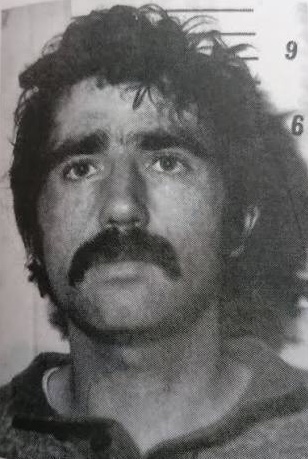
The late Brendan Hughes famously described the Good Friday Agreement as the “Got F*** All” agreement.
He had a point in relation to the Republican objective: The Republican War was concluded by the IRA with Northern Ireland still part of the British State and Sinn Fein administering British rule within a new Stormont.
The Good Friday Agreement did, of course, achieve an equalising of power between Catholics and Protestants within the dysfunctional annex of the UK known as Northern Ireland.
But what of the traditional Republican objective?
An equalising of power within Northern Ireland could have been anticipated to have reduced the desire of the Catholics for deliverance through a united Ireland. This would especially be the case if Unionists realised this and acted purposefully upon it. But, alas for Unionists—and luckily for Republicans—that hasn’t been the case, despite Peter Robinson’s comprehension of that fact, as declared in his Castlereagh speech around 2011.
Northern Ireland always generates the communal grind, which is an irresistible force of nature within it. Each side mustering up electoral support by advancing communal grievance inevitably generates support for the opposition/enemy. That is the Alpha and Omega of Northern Ireland.
It was probably the calculation of Sinn Fein that a winding down of the War, coupled with the positive-looking forces of demography, would increase the number of United Irelanders within Northern Ireland, and also lead to detaching a certain number of Protestants from the Union, thus enabling a Border Poll to be won in the future.
Gerry Adams predicted a United Ireland by 2016!
The Good Friday Agreement contained provision for a Border Poll, to be held at the discretion of the British Secretary of State.
This was not an innovation. There had, in fact, already been one Border Poll in the history of Northern Ireland. It was held in 1973: and was overwhelmingly won by the Union side—after Nationalism urged a boycott of it by Catholics.
The argument for the boycott was that the result was “predetermined” by the Protestant majority: and Catholics giving democratic legitimacy to a Protestant victory would not be a great idea. It would take the wind out of the Anti-Partition campaign that, although having passed its zenith in the year before, was still going great guns in 1972-3.
The UK Government had planned to institute regular Border Polls in Northern Ireland but, in light of the controversy surrounding the 1973 Poll, no further Polls were held over the next 25 years.
With the GFA[Good Friday Agreement] and the removal of Republican military pressure the Border Poll got another innings.
The current legal framework for holding a Border Poll was set out in the Good Friday Agreement and incorporated into UK law through the Northern Ireland Act 1998. In the Agreement, the UK and Irish Governments affirmed the “principle of consent” under which the constitutional status of Northern Ireland cannot change without the agreement of the people of Northern Ireland.
Under the 1998 Act, the Secretary of State for Northern Ireland can decide to hold a Border Poll at any time, provided that there has not been another Border Poll in the previous seven years.
The Act imposes a responsibility on the British Secretary of State to hold a Border Poll if it appears likely that a majority of people in Northern Ireland would vote for Irish unification. To create a united Ireland, unification must have the support of the people of both Northern Ireland and the Republic of Ireland. The GFA provides that a majority of voters must be in favour of a United Ireland in both jurisdictions to effect such a constitutional change.
The Good Friday Agreement, however, left several issues relating to Border Polls unclear. For example, there is no detail in the Agreement on how the Secretary of State should judge whether there is majority support in Northern Ireland for Irish re-unification. Courts have since held that there is no requirement on the Secretary of State to publish a policy setting out what evidence would be used to judge support for Irish unity.
There is also a debate as to what form a Border Poll should take: for example, what the wording of the Referendum question should be, and whether the Poll should be held on the general principle of unification, or after specific proposals have been set out for how a United Ireland would be governed.
Unanswered questions on the governance of a United Ireland include the Constitution of the new unified state, the transfer of responsibility for public services in Northern Ireland from England, and the new state’s maritime borders with the UK.
The Republic of Ireland has suggested that it would not equalise the provision of Benefits provision or the terms of Public Service Pay for a decade after unification.
The British Government does not have any duty to pay pensions, should Northern Ireland leave, since that is a Benefit and not an Entitlement, according to UK law.
The current Labour administration of the UK State has made it clear that a Border Poll is “off the table” during the current mandate. Keir Starmer also made that clear a couple of years ago; and the new Prime Minister, Andy Burnham, reiterated this view on his recent visit to Northern Ireland.
Burnham is the “saviour” of the UK political system against the threat of the Reform movement. And the saviour knows that his mission involves sorting out of the “cost of living” to draw the working class back into the mainstream of the two-party system. The weakness of the traditional governing force of the UK State, the Conservative Party, has meant that all elements of the state—BBC, media, security services, Establishment—have an interest in a Labour victory at the next election. They are pulling out all the stops to weaken Farage and bolster Burnham.
So there will be little truck with that place, Northern Ireland, sent into quarantine in 1920 to let Great Britain get on with the business of State without disturbance from Ireland. Hence the slapping down of the Border Poll speculation.
For some reason or other Nationalists have been increasingly pushing for a Border Poll—working themselves into something of a hysteria in the comment pages of the Irish News.
One wonders why that is the case? After all, the probability at the present moment is that a Border Poll would be lost by the United Ireland side. The Union is the default position, so it is up to Nationalism to convince people of the desirability of change. And as was seen in Scotland that is no easy task.
It is likely that the vote for a United Ireland would, at the moment, be fortunate to obtain a 40% level, despite the proportional increase in the Catholic population.
Understanding of this has meant that realists within Nationalism have paid a kind of lip-service to the Border poll provision—describing it as a “gain” of the Good Friday Agreement, and making half-hearted calls for its future application—but at the same time content that it is not a present possibility. That is due to the clever wording in the Agreement, which leaves the calling of a referendum to a British Secretary of State—who could be condemned as an obstructive Brit for failing to call the Referendum, but who could be relied upon to not expose the reality of the matter by actually calling a poll.
In actuality, the calling of a Border Poll at this moment would be damaging for the Anti-Partition side: it would tend to cohere Unionism in a position of last-ditch defence at a time when it is disorientated by the Jeffrey Donaldson affair and other matters; it would lead to a rare Unionist victory that would be a great moral boost after years of set-backs, and it would undoubtedly undermine the leadership of the Nationalist parties.
Dublin, of course, has no interest whatsoever in pushing the matter. It obviously is opposed to holding a Border Poll at present and has made little preparation for the eventuality of Irish Unity being successful.
Ireland is currently under pressure, internal and external, to dilute, or end, its neutrality: so that it might fit into an anti-Russian Coalition of the Willing [the term coined to cover up the lack of UN backing for the Western war on Iraq]. This pressure takes the form of describing the Irish Republic as the weakest link in the defence of Europe. One would have thought that the obvious solution to this problem, for a political class that understood the Irish historical position, was to make good on its neutrality by becoming a Switzerland—that is, to make itself well armed and dangerous to an aggressor!
At the present moment Ireland is reaping a great economic surplus—curtesy largely of US multinationals—and presumably has the means to do develop a strong defence. All that is lacking is the political will to beat off the NATO-advocates and build a military expression adequate to the challenges of re-unification.
If you believe in a Border Poll, you must make contingencies for the security situation that might follow—any independent state jealous of its national independence would do so. But the will is obviously lacking—not surprisingly. And, without that, there are only good times to crow about.
In the event of a Border Poll, and resistance to a result for unity, it seems to be of the belief that a United Ireland would be bailed out by a friendly Britain—as in general matters of defence. That could prove a catastrophic judgement. Some British minds are probably already calculating what further opportunities resistance to the result of the poll would present for Britain in Ireland.
The strategic purpose of Northern Ireland has always been the British leverage it exerts over the whole island—and that means the more important part of it, rather than the festering Northern backwater.
Britain is probably happy at Dublin’s quiescent position, and behind closed doors there must be quiet and restrained satisfaction at a job well done in neutralising Ireland’s independent spirit! Britain makes the best of setbacks and moves on—as a great and experienced State it has many ways to skin a cat. It will, no doubt, skin the Anti-Partitionists when their day has come, to the detriment of the Irish independence-minded!
Between the Arms Trials and the 1974 Bombs in Dublin and elsewhere, the British have broken the spirit of the Southern political class. As a result they have been collaborators with Britain ever since in the North—with the honourable exception of Charles J. Haughey! Europe stiffened Ireland during the Brexit negotiations. But that was old Europe’s last Hurrah. Now, a very different Europe, having conjured up the Russian threat, and saturated with Russophobia, has begun to re-establish closer ties with Britain and senses an opportunity with nice Mr. Burnham as PM.
Mary Lou McDonald has been incensed by the statement of the new British Prime Minister that a Border Poll was “off the table”. Was this faux outrage?
Brian Feeney, who recently wrote that British Secretaries of States are yesterday’s men and irrelevant, has found out that this is not the case. The Irish News columnist is becoming increasingly bitter and Hibernian in his articles.
Nationalists seem to have forgotten their history: Perfidious Albion is, of course, a persistent breaker of Treaties, from the Treaty of Limerick onwards! Did they really expect that signing the GFA would produce “an oblivion of history” between Britain and Ireland, in the words of another man with great faith in Treaties, John Redmond?
In actuality, Britain always views Treaties as a new battleground, and a new invitation to struggle. Cardinal O’Fiaich knew this and went to great lengths to remind Adams, Haughey and Hume about it in a Foreword he wrote for a book by Micheline Kerney Walsh about how Hugh O’Neill was broken after the Nine Years War: Destruction By Peace.
The IRA, under the late Bobby Storey, also realised this and conducted a fighting retreat from the battlefield in which Britain was fended off in its attempts to produce a Republican rout. Steeped in an instinctive understanding of Britain, probably through being brought up on British war movies, Northern Republicans in 1994-2007 did not make the disastrous mistakes of Michael Collins in his chaotic withdrawing from the battlefield in 1921-2.
Didn’t Father Faul marvel at the “British” resilience of Bobby Sands—with his regard for Rudyard Kipling and that most un-Irish of things: the playing of the long game! And wasn’t Martin McGuinness a lover of that great English strategic game of cricket?
Has this understanding deserted Sinn Fein in its post-conflict manifestation?
Sinn Fein have certainly got itself into a tizzy over the Border Poll matter. One wonders whether this is because things are not going so well with the GFA project?
Michelle O’Neill said something very relevant about the Good Friday Agreement a couple of years ago. She said that it was not a political settlement, but a peace process. Perfect functional government should not be of expected of it since that was not what it was for. But Republicans never fought for perfect functional government within Northern Ireland.
They always had bigger fish to fry.
Republicans did not start the War in 1969. They did try to start a war in the 1950s and it proved to be a great failure—the only achievement being a couple of good songs – Sean South of Garryowen and the Patriot Game. Republican leaders themselves retreated to Marxism and Roy Johnston.
The most recent war was started by a Catholic reform movement that tested the democratic pretensions of the Northern Ireland pseudo state. This mobilised the Catholic community into action as never before and, out of the Unionist violent response and the use of traditional forms of repression—which was applied against a popular insurrection rather than a military conspiracy—came the War. Then the mobilised Catholic masses proved a much tougher nut to crack than had been the previously sullen Catholic Community, beaten down as it was by the catastrophe of their imprisonment within the perverse political entity of “Northern Ireland”.
It was upon this situation that Republicans acted as the most purposeful and dynamic element. But this was not the old Republicanism. The Catholic community generated a new force from within itself, after the Dublin Government left it high and dry after the Arms Trials: an impetus that proved unstoppable until the GFA of 1998.
The war the Republicans fought was unsuccessful in breaking the resistance of the Protestants to a United Ireland and to the will of the British Government to retain the province. But the fact is, the British Government would have probably conceded if it hadn’t been for the Protestant resistance!
The reality was that the Protestants were a second Irish nation and the settlement Republicans had to make, when they made one, in 1998, had to be made on this basis.
Brendan Hughes and some of his associates urged that the IRA and Sinn Fein make an open acknowledgement of defeat. Hughes, an instinctive working-class socialist, was a hugely impressive, honourable and straightforward man not cut out to combat the nefarious political skills of his opponents within the Republican Movement.
Others attempted to carry on the Republican War, until the obscure event at Omagh was used to reduce them to an irrelevance. Sinn Fein opted for the pursuance of the struggle through political means within the structures of the GFA.
The question now is whether Sinn Fein strategy has run out of steam? The Catholic birth-rate has started to collapse—bringing it much more in line with that of the collapsed Protestant birth rate. So, the advent of a Catholic majority is a much slower development than was previously thought.
Sinn Fein has attempted to use a number of ideological mechanisms to detach the required number of Protestants from Unionism: including liberalism/woke, identity politics, LGBT and feminism. The idea seems to be that gay and trans Protestants, flotsam and jetsam liberals, and those enthralled by female leaders, might be willing to accept the new ultra- progressive Sinn Fein and join the State in the Republic of Ireland.
But some things are stronger than identity politics!
The formerly ultra-Catholic state in the South—produced by the most enthusiastically Catholic people in Europe—has undoubtedly reinvented itself through a massive guilt complex over Magdalene Laundries, predatory priests, and the grim depictions of Irish life of pre-Haughey former times. It has only been surpassed by Germany’s guilt complex, in creating a progressive utopia and disorientation—perfect for British wiles.
The Irish metamorphosis, logic would suggest, should divest the staunch bigoted Ulster Protestant of their “Home Rule is Home Rule” mentality!
But, sadly, no. Some things remain constant and impervious to abstract ideas and fashions despite metamorphoses.
Nationalists have tried to use Brexit as a means of levering Remainer Protestants away from support for the Union—although the half-in deal Northern Ireland got from the EU, plus a decline in faith in the peace and prosperity of the EU, which has given way to the Russophobe warmongering bureaucratic cabal that provides cover for Israel’s Genocide in Gaza—has not had the desired impact.
The problem with Sinn Fein strategy is that the tide has begun to turn, both in Ireland and the UK, against the forms of politics they bet their house on: and Sinn Fein now finds itself under pressure from people in the South who call them sell-outs.
Benjamin Disraeli said in his great Edinburgh speech of 1867:
“Change is inevitable in a progressive country. Change is constant; and the great question is, not whether you still resist change which is inevitable, but whether that change shall be carried out in deference to the manners, the customs, the laws and the traditions of a people, or …in deference to abstract principles and arbitrary and general doctrines.”
If Sinn Fein had remained the Sinn Fein of Ruairí Roger Casement O’Brádaigh, it would be reaping a political harvest now.
The latest delusional episode in the communal grind involved an attempt by Nationalism to weaponise the recent, successful, Fleadh Cheoil in Belfast.
For many years the present writer played traditional music with Protestant musicians in the staunchest parts of North Antrim, where the DUP/TUV vote was rock solid. We played in Church Halls and sometimes private residences and events—owing to the chill factor from the War. We played alongside Ulster Scots poets and storytellers. Within the Protestant communities there was a sincere love for traditional music and dancing. Protestant musicians kept alive the tradition in many places. Why should it have been otherwise when the reel came across the sea from Scotland, tunes were learnt by musicians of all backgrounds from Scottish radio rather than RTE, and it was only the feel of a tune that made it Irish or Scottish in the playing.
The most irritating part of the Belfast Fleadh Cheoil was the Nationalist taunting (“rage-baiting” as it’s called these days) of Unionists—who generally seemed to be easy with theevent—over the superiority of progressive Irish culture as against Ulster Protestant reactionary culture. This was done by people who had neither shouldered a rifle nor a banjo, and wouldn’t know the difference between a jig, slide, and a hornpipe!
The weaponised Belfast Fleadh Cheoil changed nothing politically in Northern Ireland. It produced a very temporary “feel-good” factor in the decrepit city centre. When the effects of the 10 Pounds Guinness faded away, the dreary steeples of Drumcree and the Garvaghy Road came back into view.
It did not disturb the reality that there are still two nations in Ireland. And there is little to suggest that Sinn Fein, so far, has made any inroads into that most bitter of truths.

